I’m going to come right out and say what my opinion is on this topic, and as always with matters of mental health, it’s a yes, but also a no. To be fair, the spark that ignited my interest in psychology and mental health were diagnoses and disorders that affect the mind. It’s fun to read about. Our brains like categorizing things, and what is more fun than categorizing what is “wrong” with you and other people?
In fact, I have a very clear memory of going to the library with my mom one day and grabbing a book on mental health diagnoses (I was like 14, and yes, I had very adult interests both as a child and a teen). It was not the DSM but it had a similar format in which it separated diagnoses by big, bold-lettered titles and subsequently followed with the signs and symptoms of that diagnosis. The first thing I read about was schizophrenia, and I was fascinated! At the time my mother was still working at a residential home with individuals who had various intellectual and developmental disabilities. Coincidentally enough they had an individual in her house who did have a diagnosis of schizophrenia and struggled with delusions that someone was coming to kidnap her.
My mother never shared names or any identifiable information (protect that confidentiality people!), but I did ask her if she had any experience with this, at the time, surreal and engrossing concept. And she did! I was hooked! I had her tell me everything that she was able to! Delusions? What was a delusion? She saw things!? That weren’t there! That could actually happen! It became a morbid fascination and I remember finally being able to take an Abnormal Psychology class in college and thinking, “This was the class that made college. This was it.”
My tone has changed as I’ve actually seen the impact diagnoses can have in working with real life clients.
Before I jump into my personal opinions or living experience with diagnosis being harmful, I do want to share some history on the DSM, or what some people lovingly dub the Bible of the mental health world.
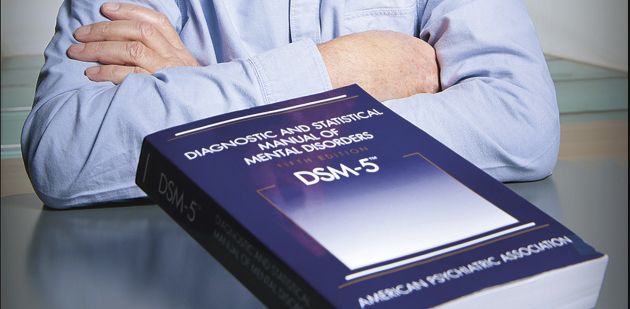
The DSM. The Diagnostic and Statistical Manual of Mental Health Disorders. In many ways it IS the Bible of the mental health field. Us mental health professionals use it to give clients diagnoses for treatment. Is it really for treatment purposes though? Kind of. I say this because these diagnoses are what allows us to get paid. Insurance companies need us to slap a label onto a client so they will reimburse us, and everything, even mental health is about money.
However, I digress. The DSM was developed in a really shitty way if you ask me. It’s wild, but the initial starts of the DSM stemmed from a meeting of minds in the field of psychoanalysis. These individuals came from two established organizations: the Committee on Statistics of the American Medico-Psychological Association (now the APA!) and the National Commission on Mental Hygiene. Basically these mental health giants all sat in a room, said “We need a common jargon! We’re making up all these neuroses and the language of the field is not consistent! This is causing too much confusion!” And then some dumb idiot said to the crowd of wanna-be Freuds, “Okay, just shout out what you think the categories should be and then we can fill in the symptoms.” Despite this being an incredibly oversimplified version of what happened, that’s basically how it went. This manual became known as the Statistical Manual for Use of Institutions for the Insane (if you want to read this manual it’s available online). It’s important to note that this manual was NEVER INTENDED TO BE USED FOR DIAGNOSIS! And as you’ve probably guessed, the Statistical Manual for Use of Institutions for the Insane became the foundational basis of the DSM. It’s also incredibly important to note that this manual was developed with little to no empirical research.
Let me start with the positive because as soon as I get to the critical piece I know people will be on my ass about being invalidating, stigmatizing, ableist, gaslighting, etc. (Side note, stop saying everything is gaslighting. Like Jesus Christ. Pop psychology really has its dirty claws over everything).
Diagnosis can be a good thing. I think it is a very good thing that us mental health professionals have a common language. If we were still going around creating all different types of “neuroses” and “reactions” I think the mental health world would be a very confusing place (more confusing than it is now I suppose). Can you just imagine the conversations mental health professionals would still be having?
“I had someone the other day who presented with a ‘sleeping neuroses’”
“That’s fascinating! I wonder if it has anything to do with the ‘masturbatory neuroses’ I saw just last week!”
It would become a depressing-from-the-outside Monty Python sketch real fast.
Another benefit I see in diagnoses is that it does provide a lot of clients with relief. Imagine going around thinking that something is really wrong with you, and there’s no apparent hope. And then someone is able to tell you, “Well no. You’re not crazy and prognosis is not hopeless. We have a name for what you’re struggling with and other people who have been through similar experiences have made it through and even prospered.” The relief that comes with something like that! Knowing that there is something you can do about your struggles!
Here comes the criticism, the part where my efficacy as a mental health counselor is questioned and I’m labeled as worsening the issue of stigmatized mental health.
It is my strong opinion that we mental health professionals focus too much on diagnosis, myself included. We’ll sit there for days and mull over whether someone has Bipolar, Borderline Personality Disorder, Narcissistic Personality Disorder (that’s another thing, stop throwing around the term “narcissist” so freely; it’s getting really old), Autism Spectrum Disorder, or maybe just a severe case of Social Anxiety Disorder or Generalized Anxiety Disorder. Who cares!? Seriously! Who cares? What are they actually struggling with?! Fuck the diagnosis! Do they struggle with getting out of bed? Do they have turbulent relationships with other people? Are they constantly on edge and worried about everything? Focus on that! And focus on why that is happening for them! How do we fix it? How do we help this person who is coming to us for help? Why does it matter what category they fall into? Just help the human being in front of you!
Because then what happens, if you focus too much on diagnosis, is that anything that doesn’t fit into that cookie cutter diagnosis is either
A) Ignored
B) Diagnosed some more!
C) Seen as unusual and not fitting in the mold
D) Not treated appropriately!
Identifying As Your Diagnosis
Another trap I see a lot of clients fall into is that they become their diagnosis. Have you ever heard someone say something like, “I’m Bipolar.” No you’re not. You’ve been diagnosed with Bipolar. You may present symptoms that are consistent with what we think of as Bipolar, but you are not literally the concept that is Bipolar. I’ve had so many clients become their diagnosis. And of course to some diagnosis CAN be relieving. It can be a reason, finally a reason, that they are struggling. Where it gets dangerous is when a client’s whole identity becomes their diagnosis.
“Oh boy, I’m super hyper today. It’s the Bipolar.” Is it really? Or are you a human? Human feelings and emotions fluctuate, whether they are diagnosed with Bipolar or not.
“I’m having so much trouble getting out of bed today. Damn Bipolar.” Is it really the Bipolar? Or do most humans have days where they struggle to get out of bed.
This is where a vast majority of the crowd would say I’m being ableist or invalidating to people with mental health concerns. Others would say that I shouldn’t be a therapist because I’m not taking mental health diagnoses seriously enough. Hold your horses. I’m not saying that these examples are absolutely not related to mental health symptoms, maybe it is the Bipolar that makes it difficult for you to get out of bed. My issue with it is when it becomes the person. There’s a reason that person-first language exists and I highly suggest that you look into it.
My other issue with someone identifying as their mental health diagnosis is that they lose power. If you become your mental health diagnosis you let the diagnosis control who you are, what you do, how you live. To me that sounds like a pretty hopeless situation. As someone who has struggled with anxiety their entire life, and depression for about a decade, I do not want to make the mental health diagnoses I have been given a part of who I am. If you can separate your identity from your mental health concerns, you gain power and control over them. “I’m anxious”, is a lot less manageable than, “I am feeling anxiety in this moment.” Reframing the way you speak of your mental health diagnoses means that you can cope with them!
Misdiagnosis
I had a client just the other day who struggles with Tardive Dyskinesia because she’s been misdiagnosed so many times and been on hard psych meds for so long, that she is now permanently medically affected. Her real issue? The issue that her dozens of doctors and clinicians were not seeing or refusing to acknowledge or just aren’t educated enough in this arena? Trauma, she has an extensive history of trauma; a history that most of us probably can’t even fathom. Trauma is something I’ll get into in just a moment.
Related to this, too many therapists and counselors fall into the trap of sticking to the treatment that’s “meant” for someone’s diagnosis, which often leaves some clients feeling inadequate and helpless if that treatment does not work for them. You have a client with Borderline Personality Disorder, use Dialectical Behavior Therapy! (Although DBT is pretty much the GOAT at this point). Someone struggling with Depression? Get that Behavioral Activation Therapy started. And as we all know, Cognitive Behavioral Therapy (CBT) is the end-all be-all for pretty much everything, especially anxiety! But what happens if these treatments that are “designed” for these diagnoses don’t work? What if the client has gone through the designated theoretical approach and they are still really suffering with their mental health? They’re often left feeling helpless and hopeless; I’ve seen this over and over again. Some of this could be due to misdiagnosis! What if the treatment we’re using for depression isn’t working because the client actually has some past trauma that is effecting them instead? What if it’s not actually depression or anxiety and it’s just a lifestyle issue? What if something medical is going on? (I mean, in that case we should 100% refer them to their doctor). My point is misdiagnosis very often leads to poor treatment.
I think the other part of this means that us therapists need to be more flexible, and also learn other treatment models besides what we’re comfortable with. We were probably taught some form of CBT in school, ergo we are comfortable with it. Take trainings on other types of treatment! I’m begging you. Have multiple tools in your tool box because not every client is the same, and what works for one client will not work for another. And be open to recognizing when your “golden child” treatment for Depression just isn’t working. Please, I’m begging more flexibility in myself and other therapists.
Trauma (Trigger Warnings for this section)
Not to get all high and mighty, but I’m currently in the process of taking a training course on trauma (through the Arizona Trauma Institute) and it’s REALLY changed my perspective on not just diagnoses, but also the way I practice therapy. In short it’s been pretty enlightening. Something this training often harps on is the idea that the symptoms people portray, when they have been traumatized, are normal reactions to what they have experienced.
For example, and trigger warnings here, a child that has been molested will very often go through life interpreting relationships in a very different way from someone who has not gone through such a trauma. They may come across as inappropriate and have strange mood fluctuations, but instead of realizing that this child is responding to the trauma they experienced in a normal way, we may try to slap a label of ADHD, Depression, Anxiety, maybe sprinkle a bit of Oppositional Defiant Disorder in there because why not. Women who have been historically abused by partners may respond to the relationships in their life in a way that could be perceived as “manipulative”, when in reality they are navigating their world in a perfectly normal way as it relates to the trauma they experienced. Forget that! She has Borderline Personality Disorder (for those who don’t know, Borderline is basically the mental health equivalent of tying a sign around someone’s neck that reads, “Stay away from me, I’m crazy” – it’s the mental health Scarlet Letter. To put it more lightly, Borderline is a highly, HIGHLY stigmatized mental health diagnosis). On a similar note, the sheer number of clients who I have seen who have been diagnosed with Bipolar at one point in their life and then never display Bipolar-type symptoms again is insane (no pun intended). It’s almost as if they were going through something highly stressful? And the manic and/or depressive symptoms they were displaying were normal reactions to a highly stressful environment? No no no! That’s not it! They have Bipolar and they are taking antipsychotics! No questions asked!
The point here is that trauma is real and it does strange things to the brain. I truly believe that a large number of these diagnoses we are giving people are simply an impulsive therapist’s reaction to symptoms a client is presenting from trauma. And again, not to get on my soap box again, but I do think all therapists and mental health professionals would highly benefit from learning about trauma-informed care.
Historical Context of Diagnoses
Finally, it’s important to note that mental health diagnoses do not have a very good historical rep. There have been several diagnoses throughout time that have been used to oppress various groups of people. I think many people are aware that “homosexuality” was in the DSM up until the year of our lord 1973, and “gender dysphoria” is currently a pretty controversial diagnosis that is in the DSM V (the current version of the DSM). I want to touch on two diagnoses more specifically though.
The first being “hysteria” – I fucking love this one. You want to describe the plight of women modern and ancient, you can wrap it all up with Hysteria. The concept of hysteria stems back to Ancient Greece and Egypt; the Gregorian definition however is where it gets really funny. Starting around the 1880s, it came to be understood that hysteria covered an entire gambit of behaviors and moods in women that might have been deemed undesirable. There were several theories for what caused hysteria, most being that women who were begotten with hysteria had an overabundance of lady liquids and a lack of presence of semen in their bodies. One of the more common recommendations for hysteria was for a woman to get married – to a man – and subsequently engage in coitus. The more hysterical (we’re going for the super low hanging fruit) “cure” was for a medical professional to manually stimulate a woman’s uterus and clitoris, essentially “releasing” her dastardly female liquids.
CAN YOU IMAGINE!? “Is the woman in your life fainting a lot? Is she depressed, anxious, irritable? Is she talking back and standing up for herself? Wouldn’t you know it?! The solution is an orgasm that your 1-minute-long, penetrative sex – nil foreplay – cannot provide!” It’s kind of shocking how off the mark – and on the mark *badum tss* – medical scientists really were with this one. Brilliant. Absolute comedy gold.
The second diagnosis I wanted to touch on, and this one being far more serious, is a diagnosis given to slaves who wanted to be freed. I swear I’m not making this up. Here is a direct passage of a doctor writing about the diagnosis they labeled “Drapetomania”. What a familiar theme; take the empathy out of human emotion and label a normal reaction to an incredibly stressful circumstance as disorderly. How convenient for slave owners to be able to explain why their slaves were trying to escape. It blows the mind.
Strange place to end, I realize that. I know at the beginning of this article I was pointing more towards the direction of ambivalence, but after rereading what I wrote it would seem I’m seriously over diagnoses. I just want to reiterate, I do think that diagnoses can sometimes be a good thing. I really do think it was important to give mental health professions a common language. I also think when someone gets a diagnosis it is often easier for them to find and receive the care they need. I also think that for a lot of people, a diagnosis can be comforting; they realize that they are not actually losing their mind and there is a name for the monster under their bed. However, like most things in life, mental health diagnoses have their place, but I think we seriously need to take a look at the evil of diagnoses and how we can make good.
 Unsolicited Opinion